Welcome to the Department. It is always July here.
A word from the Department of Amateur Performance.
The Department of Amateur Performance is making cycling cool again. Nobody asked it to.
Its view is that cycling was cool long before anyone measured it. Wool jerseys. Tan lines with an edge on them. A café stop that ran forty minutes over. A chalkboard held out of a car window with the gap on it.
The Department is not against numbers. It has simply never seen one look good in a photograph.
None of it needs a good bike or a free afternoon. The spare room counts. So do ten minutes.
It keeps a television that only shows old races, a wireless, a cat who holds three of its offices, and one item on the agenda: more good legs days.
A good legs day is the one when the road goes up and you don’t mind. The Department cannot issue them. It can keep the wireless on while you earn one.
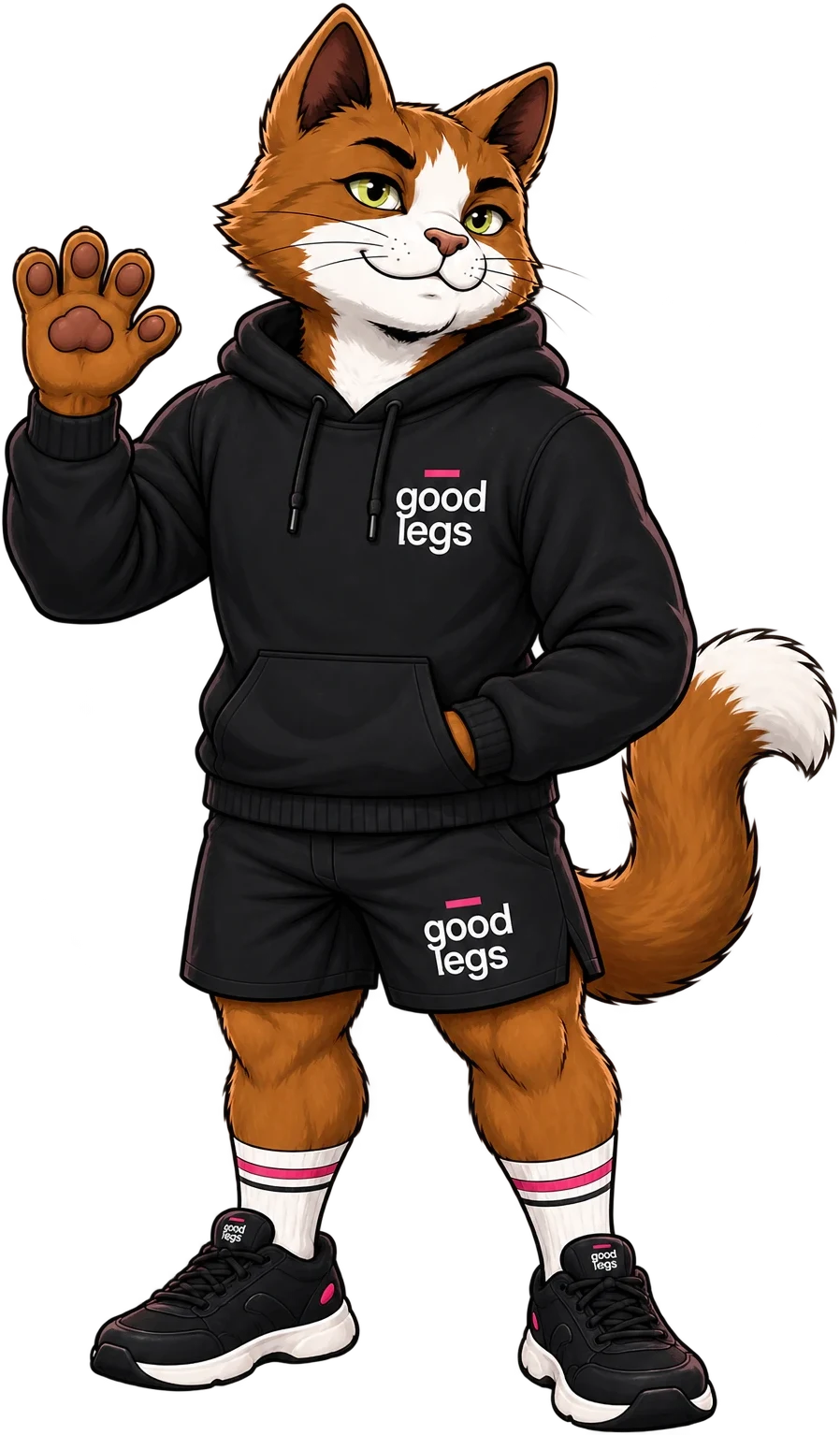
Full disclosure: there is no Department. There’s a wireless, a small team and a cat who has somehow ended up in charge.
The Circular · No. 1 · Why this exists
It started with a frustration. Two, actually.
An hour to ride, and twenty minutes of it gone before a pedal turned.
We had an hour. Twenty minutes went on finding something to listen to. A third of the session, thumb-scrolling past playlists called things like Beast Mode, on a bike that was not moving.
Then the other one. Five minutes into a twenty-minute threshold effort, breathing through the ears, and shuffle picked Justin Bieber. You cannot skip a song at threshold. Your hands are busy holding on. So you ride fifteen minutes to it or you sit up, and either way the effort is ruined.
So we made a radio station. Somebody with taste picks the music and puts it in order. You press play before you clip in and you do not touch it again. No scrolling. No shuffle. No surprises at threshold.
It’s a radio station. It won’t make you faster. It might hand you back twenty minutes, which on an hour’s ride is the next best thing.
The Circular · No. 2 · Standards
A ruling on tan lines.
The Department has been asked to settle it. It has.
A tan line is a record. It says where the sleeve ended, how long you were out, and that you had better things to think about.
The Department recognises four. The sleeve, which should be sharp enough to rule a page with. The short, same standard. The sock, which ends every argument about sock height. And the glove, a small pale oval on the back of each hand that only another cyclist can read.
On a beach the full set makes you look as if you are still wearing the kit. The Department regards that as the point.
You cannot upload one. You cannot get one out of a bottle. Fake tan is a matter for a different department.
Which brings us to the winter. You can go to the tanning salon in your shorts and jersey to keep them crisp. It shows dedication.
Otherwise the line comes back in July. Here it never left.
The Circular · No. 3 · Records
A register of the people you ride with.
Compiled over many café stops. Corrections are not being accepted.
The Department keeps a register of training partners. Every club has all of them. Most riders are on it and are sure they are not.
The Easy Spinner. Writes “easy spin tomorrow” in the group chat. Is on the front doing forty by the second roundabout. Has never been asked to explain.
The Half-Wheeler. Rides half a wheel ahead of whoever is alongside. Draw level and the pace goes up. Has been doing it since 2011 and has not noticed.
The One Who Is Not Going Well. Has a cold, slept badly and has not touched the bike in a fortnight. Takes the sprint for the town sign and puts it down to the rest.
The Statistician. Gives you a threshold figure before a name. The Department has it on file. It did not ask.
The Noise. The bike is just back from the shop. Something is ticking and nobody can find it. You will stop twice, and the second time it will be raining.
The Borrower. No tube, no pump, no money for the café. Nine years in the club.
The Winter Champion. Unbeaten from November to March, in a spare room, against people from Belgium. Comes back out in April, pale and very fit.
Riders who cannot find themselves on the register should send it to the people they ride with. An answer usually comes back inside a minute.
The Circular · No. 4 · Personnel
The fan has been promoted to essential personnel.
A review of last winter has concluded.
The Department accepts that the fan does more work than anyone else in the garage. It has asked for nothing. It has never missed a session.
With immediate effect it outranks the towel, the second bottle and whoever said they would only do an easy hour.
Three settings are recognised: one, two, and the one that moves the curtains. Only the third is to be used.
This notice also concerns the rider who trains without one. Every club has such a rider. The claim is that it builds heat tolerance. The Department has examined the evidence, which is a puddle, and finds the only thing being built is rust on a headset.
Riders are asked to point the fan at themselves and say thank you.
The Circular · No. 5 · The list
We have a mailing list now. Sorry.
You were not consulted. Neither, really, were we.
One list. It is for the wireless and nothing else.
You get one email when a new set goes up. It says what the set is, how long it runs and where to find it. Then it stops.
It will not ask if you saw our last email. It will not be just checking in. It will not tell you what cycling taught us about leadership.
How often: every other Friday at most. That rules out most weeks.
To leave, reply with the word no and you’re gone. We’ll act like we don’t mind.
The Circular · No. 6 · Premises
The spare room is approved for sporting use.
The Department has completed its inspections.
The spare room, the garage, the corner of the gym by the fire door and one landing have all been inspected. All are approved for sporting use.
A turbo facing a wall is a valid training venue. So is a squat rack beside the washing machine, which will reach its spin cycle at the same moment you reach yours.
Inspectors found a kettlebell holding a door open in nearly every premises. A kettlebell holding a door open is not in use. It may stay where it is, but it does not count.
A room with rubber flooring, a mirror and a neon sign is also approved. The Department has checked, and the legs cannot tell the difference.
Nobody will be asked what else is kept in there. The clothes horse may stay.
The Circular · No. 7 · Minutes
Minutes of a meeting about the playlist.
Present: the cat. Apologies: everyone else.
Item one: shuffle. Abolished. The cat abstained, then knocked a pen off the desk.
Item two: whether the station needs a man shouting encouragement between songs. Rejected. Nobody has ever pedalled harder because a stranger told them to.
Item three: songs with a ninety-second intro. A four-minute effort cannot wait that long for the drums. Referred to the DJs, who already knew.
Item four: the friend who asks for the aux lead. Noted that every club has one, that the album will be the one from 2009, and that your face will be watched while it plays. No action possible.
Item five: a recording of a man saying pain is temporary, set to a house beat. Banned. The vote was unanimous, which is easy with one member present.
Any other business: the cat left. Meeting closed.
{{ news.count }}
Asking the cat for the post…
Guides
Guides
Workouts for people who ride, each with a set to play while you do them.
Guides · Strength & Conditioning · 20 minutes
Core Workout for Cyclists: 20 Minutes, One Band
Six movements that keep your pelvis still on the saddle, your trunk quiet under power and your lower back out of trouble.
Most core routines are built for the mirror. This one is built for the saddle. A cyclist’s trunk has three jobs: stop the pelvis rocking as the cadence climbs, resist the twist that comes with every hard pedal stroke, and hold the spine in a decent shape for hours. So there are no crunches here. Every exercise below is about holding a position while a limb moves.
Twenty minutes, one resistance band for the Pallof press, a mat if your floor is hard. Each exercise has a 30-second demonstration: it plays without sound, so your music carries on. Tap Sound for the spoken cues. Rest 30 to 45 seconds between sets and keep every rep slow enough to feel the position.
Listen while you work
Paired set: Garage Hours, Purple Disco Machine, Tomorrowland Ibiza Sunset Mix. Garage Hours is an hour long, which covers the circuit with room for a second pass.
The six exercises
1Dead bug3 sets of 8 each side
Why it matters: it trains the pelvis not to rock at high cadence.
Lie on your back with your arms pointing at the ceiling and your hips and knees bent to 90 degrees. Press your lower back gently into the floor and keep it there.
Lower the opposite arm and leg towards the floor, slowly, and stop before your back lifts off the mat. Return, then switch sides.
If your back arches, shorten the range. A small movement with a flat back beats a big one with a loose one.
2Band Pallof press3 sets of 10 each side
Why it matters: it’s the anti-rotation work that keeps your upper body quiet when you’re putting out 300 watts.
Anchor a resistance band at chest height and stand side-on to it, feet hip-width apart, holding the band at your sternum with both hands.
Press straight out until your arms are long and hold for two seconds. The band wants to turn you towards the anchor. Don’t let it. Bring your hands back in under control.
Do all the reps on one side, then turn around. Step further from the anchor to make it harder.
3Side plank3 holds of 20 to 30 seconds each side
Why it matters: lateral stability. When you’re climbing out of the saddle, this is what stops energy leaking sideways.
Lie on your side with your forearm under your shoulder and your legs straight, feet stacked or one in front of the other. Lift your hips so your body makes a straight line from head to heels.
Press the floor away with your forearm and lift the underside of your waist. Hold. Keep your shoulders stacked and your hips facing forward.
Bend your knees and hold from the knees instead if you can’t keep the line yet. Stop the hold when your hips start to sag, not when the clock says so.
4Bird dog3 sets of 8 each side
Why it matters: contralateral stability, the same diagonal pattern your body uses through the pedal stroke.
On hands and knees, hands under shoulders and knees under hips, with a long, neutral spine.
Reach the opposite arm and leg out until they’re level with your trunk. Hold for two seconds, then bring them back.
Picture a glass of water balanced on your lower back. If it would spill, your hips are rotating. Reach less far and keep them square.
5Bear plank shoulder tap3 sets of 8 each side
Why it matters: anti-rotation under instability, which is what a bike is.
Start on hands and knees, hands under shoulders and knees under hips. Tuck your toes and lift your knees a few centimetres off the floor. Your back stays flat, like a table.
Lift one hand and tap the opposite shoulder, then replace it and swap. Your pelvis should barely move. If it rocks, the reps are going too fast.
Set your feet wider to make it easier. Put your knees down between sides if you need to.
6Glute bridge3 sets of 12
Why it matters: it wakes up the glutes, which do most of the work in seated climbing and switch off after hours in the saddle.
Lie on your back with your knees bent and feet flat, about hip-width apart. Drive through your heels and lift your hips until your body makes a line from shoulder to knee.
Pause at the top and squeeze your glutes. Lower your hips slowly and keep your pelvis level on the way down.
If your hamstrings cramp, bring your feet closer to your body. If your lower back takes over, lift a little less high.
Do this three times a week. Before a ride or on a rest day, not after a hard session when you’re fatigued. Press play on Garage Hours and let the set carry you through.
Stop if you feel sharp pain, as opposed to the ordinary burn of working muscle. If your lower back hurts during or after these, or you have a history of back trouble, check with a physio before you carry on.
Questions
Do cyclists need core work?
Yes. A weak core means energy leaks through your pelvis instead of going to the pedals. Every watt you lose to trunk instability is a watt you paid for and didn’t use.
How often should cyclists do core?
Three times a week, 15 to 20 minutes. Consistency matters more than intensity.
Can I do this before a ride?
Yes. A short core session before riding activates the stabilisers. Don’t do it to failure. The point is activation, not exhaustion.
Guides · Strength · 30 minutes
Three Exercises for a Faster Sprint
A sprint is force, applied fast, one leg at a time. Three lifts cover all of it.
A sprint is ten to fifteen seconds of the most force you will put through the pedals all day. Riding more does not train it. Endurance work makes you efficient, and peak force needs load. So this one happens in a gym: three lifts, heavy enough to matter, twice a week.
You need a trap bar, a barbell with a bench, and a box at about knee height. Do two lighter sets of each lift before the working sets, and rest two to three minutes between heavy sets. The rest is part of the work. Each lift has a 30-second demonstration: it plays without sound, so your music carries on. Tap Sound for the spoken cues.
Listen while you work
Paired set: Heavy Rotation, Fatboy Slim, Everybody Loves A Mixtape, Vol. 9: Big Beach Boutique Revisited. An hour of Fatboy Slim, which covers the session, the rests and the walk back to the changing room.
The three lifts
1Trap-bar deadlift4 sets of 5
Why it matters: it builds peak force through the hips and knees together, the same joints that fire when you jump on the pedals.
Stand inside the bar with your feet hip-width apart. Push your hips back, bend your knees and take the handles. Chest up, back flat, arms long.
Brace, then push the floor away and stand up tall. Your hips and shoulders rise at the same speed. Pause at the top with your trunk braced.
Lower the bar under control and let it settle before the next rep. Pick a load you could lift seven times and stop at five.
2Barbell hip thrust3 sets of 8
Why it matters: driving the hip straight is where most of the power in a pedal stroke comes from, and the glutes are the biggest engine you have for it.
Sit with your upper back against a bench and the bar across your hips. Pad the bar. Feet flat, about hip-width apart, close enough that your shins are upright at the top.
Drive through your heels and lift your hips until your trunk is level. Keep your ribs down and your chin tucked. Hold for one second.
Lower slowly. If you feel it in your lower back and not your glutes, lift a little less high and keep the ribs down.
3High box step-up3 sets of 6 each side
Why it matters: a sprint is single-leg work. This makes each leg produce force on its own, from a deep hip angle like the top of the stroke.
Put one whole foot on the box and lean forward slightly, so your weight is over that foot.
Drive through the foot on the box and stand up tall. The trailing leg comes along for the ride. If you are pushing off the floor, the box is too high.
Lower for a slow count of three and touch the floor lightly. Do all the reps on one side, then swap. Hold dumbbells once six clean reps are easy.
Do this twice a week with two days between sessions, and not the day before a hard ride. Give it six weeks before you judge it. Put Heavy Rotation on and take the rests.
These are loaded lifts. If you have not lifted before, start with an empty bar or light dumbbells and have a coach or an experienced lifter watch your first session. Stop if you feel sharp pain, as opposed to the ordinary effort of a heavy set.
Questions
Will lifting make me heavier?
Not on two sessions a week alongside your riding. At these rep ranges the early gains come from your existing muscle learning to produce more force, not from new muscle.
Should I keep lifting during the season?
Yes. One session a week holds on to what you built. Take a set off each lift and keep the load the same.
Can I do this at home?
Not this one. It needs load. For a session with no equipment, start with the core workout.
Guides · Strength · 25 minutes
Single-Leg Strength for Cyclists: Four Exercises, Two Dumbbells
You pedal one leg at a time. Train them one at a time and the weaker one has nowhere to hide.
A pedal stroke is one leg pushing while the other gets out of the way. Squats and deadlifts on two legs let the stronger side cover for the weaker one, and most riders have a weaker one. Single-leg work finds it within a set or two.
You need a pair of dumbbells, a low bench and about twenty-five minutes. Start every exercise on your weaker leg and match the reps on the stronger one, no more. Rest ninety seconds between sets. Each exercise has a 30-second demonstration: it plays without sound, so your music carries on. Tap Sound for the spoken cues.
Listen while you work
Paired set: Last Set, Jaguar Skills, Rinse FM Bass Workout. Thirty-six minutes: the session, the rests, and time to put the dumbbells back.
The four exercises
1Reverse lunge3 sets of 8 each side
Why it matters: it loads the front leg through the hip and knee together, as the downstroke does, and stepping back is kinder to the knees than stepping forward.
Stand tall with your feet hip-width apart and clear space behind you. Hold a dumbbell in each hand once the unweighted version is easy.
Step back quietly and lower until the back knee is just off the floor. Keep the pressure through your front foot.
Pause, then drive through the front foot and return to standing. Reset your balance before the next rep.
2Rear-foot elevated split squat3 sets of 6 each side
Why it matters: with the back foot on a bench, nearly all the load goes through the front leg. It is as close as the gym gets to pushing a big gear on one side.
Rest your rear foot on a low bench and plant the front foot firmly, far enough forward that you can lower straight down.
Lower under control and pause briefly at the bottom. Keep your front knee tracking over your foot.
Drive through the front foot to rise, keeping your trunk steady. Pick up the dumbbells only once six clean reps are easy without them.
3Single-leg Romanian deadlift3 sets of 8 each side
Why it matters: it trains the hamstrings and glutes to control the hip on one leg, and it shows up any wobble at the hip and ankle straight away.
Stand on one leg with a soft knee. Hold a dumbbell in the opposite hand.
Reach your free heel back as your chest moves forwards, tipping from the hip. Keep your back flat and your hips level.
Go as far as your hamstring allows, then bring your chest and free leg back together and stand tall. Touch a wall with your free hand if your balance gives out before the leg does.
4Single-leg calf raise3 sets of 12 each side
Why it matters: everything your hip and thigh produce reaches the pedal through the calf. It works on every stroke and almost nobody trains it.
Stand on one foot beside a stable support and hold it lightly. Keep the working knee straight.
Lift your heel as high as it goes, keeping your ankle steady.
Lower slowly, over about three seconds, without letting the ankle roll out. Move to the edge of a step for more range once flat ground is easy.
Do it twice a week, with at least a day between sessions and not the day before a hard ride. Add load when the last rep of the last set still looks like the first. Put Last Set on and take the rests.
Learn each exercise without weight first. Sore legs for a day or two after the first session are normal. Sharp pain in a knee, hip or back is different: stop and get it looked at.
Questions
Why single-leg exercises for cycling?
Pedalling is single-leg work. Training one leg at a time builds strength in the pattern you ride in, and stops the stronger side doing the weaker side’s share.
How heavy should the dumbbells be?
Start with a weight you could lift for three more reps than the set asks for. Go up when all three sets feel that way.
Can I do this in the same week as the sprint session?
Yes. Do one of each, two or three days apart. Both are heavy on the legs, so keep them off consecutive days.
Guides · Upper Body · 10 minutes
Neck and Shoulder Exercises for Cyclists: Five Moves for Long Rides
Your head weighs about five kilos, and on a long ride your neck holds it up for hours. Five moves to make that easier.
On the bike your upper back rounds, your shoulders creep towards your ears and your neck bends back so you can see the road. Hold that for three hours and the muscles at the back of the neck do all the work, while the ones at the front and between the shoulder blades do very little. The ache at hour three is those muscles running out.
These five moves train the neck to hold the position, hand some of the work back to the upper back, and loosen the part of the spine that is supposed to do the bending. No weights. You need a mat, a bench and a wall. Each move has a 30-second demonstration: it plays without sound, so your music carries on. Tap Sound for the spoken cues.
Listen while you work
Paired set: Garage Hours, Purple Disco Machine, Tomorrowland Ibiza Sunset Mix. Start the set, do the ten minutes, then get on the bike with most of the hour still to run.
The five moves
1Supine chin tuck8 holds of 5 seconds
Why it matters: the small muscles at the front of the neck keep your head steady. On the bike they spend hours stretched long and doing nothing.
Lie on your back with your knees bent and let your head rest on the floor.
Nod your chin gently towards your throat and hold. The back of your head stays on the floor.
Breathe normally. The front of the neck works while your jaw and shoulders stay relaxed. It is a small movement: if the muscles at the side of your neck stand out, ease off.
2Quadruped neck extension hold5 holds of 10 seconds
Why it matters: this is the riding position without the bike: the back of the neck holding your head up against gravity. It builds the endurance those muscles run out of.
Start on your hands and knees with a long spine and your eyes on the floor.
Lift your gaze gently forwards, to about where the road would be, and hold. Keep breathing.
Keep your shoulders away from your ears and your lower back still. Let your eyes drop to the floor between holds.
3Bench thoracic extension8 slow reps
Why it matters: when the upper back will not straighten, the neck has to bend further to lift your eyes. Free the upper back and the neck has less to do.
Kneel facing a bench. Rest your elbows on it with your hands behind your head.
Sink your chest gently towards the floor, keeping your elbows on the bench. Keep your ribs down, so the bend comes from your upper back and your lower back stays out of it.
Take one breath at the bottom, then bring your chest back up slowly.
4Prone Y-T raise2 sets of 6 of each
Why it matters: the muscles between and below the shoulder blades hold your shoulders down and back. When they tire, the shoulders ride up and the neck takes the load.
Lie face down on a bench, an incline one if you have it, and let your arms hang with your thumbs up.
Lift your arms into a Y and lower them slowly. Then lift them straight out to the sides into a T. Keep your neck long and your eyes on the floor.
Use no weight to begin with. The lift is small and slow, and it starts at the shoulder blades.
5Wall slide10 slow reps
Why it matters: it teaches your arms to go overhead while your ribs stay where they are, which is the hunch in reverse.
Stand with your back, elbows and wrists against a wall.
Slide your arms up the wall, keeping your ribs down. Go only as high as your wrists and elbows stay in contact.
Slide back down slowly. If your lower back arches away from the wall, you have gone too high.
Do it three or four times a week, before a ride or on its own. It works as a warm-up for the turbo: start Garage Hours, do the ten minutes, then clip in.
Nothing here should cause pain, pins and needles or dizziness. Stop if it does. Neck pain that travels into your arm or hand, or that does not ease once you are off the bike, is one for a physiotherapist or a doctor.
Questions
Why does my neck hurt on long rides?
Your neck bends back for hours so you can see ahead, and the muscles holding it get tired. A rounded upper back and a long, low position make them work harder.
Will this fix my neck pain?
It helps with the ordinary ache that comes from holding the position. It will not fix a bike that does not fit, or an injury. If the pain is sharp, one-sided or comes with numbness, get it looked at.
How long until it helps?
Give it four to six weeks at three sessions a week. Endurance in small muscles builds slowly.
Guides · Mobility · 10 minutes
Mobility for Cyclists: Five Moves, Ten Minutes
The bike holds you in one shape for hours. These five moves take you through the ones it leaves out.
Riding is one position, repeated. Your hips never fully straighten, your upper back stays rounded over the bars, and nothing moves sideways or turns. Being stiff in those places is what a few thousand hours of practice at one shape looks like.
This is five moves in ten minutes, working from standing down to lying on your back. None of them is a long hold: go slowly into each position, pause for a breath and come back out. Each move has a 30-second demonstration: it plays without sound, so your music carries on. Tap Sound for the spoken cues.
Listen while you work
Paired set: Spin Down, DJ Jazzy Jeff, Magnificent Lunch Break. Easy music for slow work. Ten minutes in, you can stop or go round again.
The five moves
1Ankle rock at the wall10 each side
Why it matters: a stiff ankle makes the knee and hip find the missing range somewhere else, on the bike and in every squat or lunge you do off it.
Face a wall in a split stance with your hands on it. Plant the whole of your front foot.
Move your front knee forwards over your middle toes until the ankle stops you. Keep the heel down the whole way.
Come back out smoothly and reset your balance. Do not force the end of the range. It moves a little further over a few weeks.
2Half-kneeling hip-flexor mobility8 each side
Why it matters: it is the one direction your hips never go on the bike: straight, with the thigh behind you.
Kneel with your front foot planted and both hips facing forwards. Put a cushion under the back knee if the floor is hard.
Tuck your pelvis under first, as if drawing your belt buckle up towards your chin. Then shift forwards gently, keeping your ribs over your pelvis.
Stop when the front of the back hip pulls, take one breath and ease back. If your lower back arches, you have gone past the stretch.
3Adductor rock-back8 each side
Why it matters: the inner thighs spend every ride working in one narrow line. This takes them long and out to the side.
Start on your hands and knees. Straighten one leg out to the side with the foot flat on the floor.
Keep your hands planted and move your hips back towards your heel. Keep your spine long as you go.
Bring your hips forwards again smoothly. You should feel it along the inside of the straight leg.
4Side-lying thoracic rotation6 each side
Why it matters: hours over the bars leave the upper back rounded and stiff. When it will not turn, your neck and lower back do the turning for it.
Lie on your side with your head on a cushion, your knees bent and both arms straight out in front of you.
Lift the top arm and open it across towards the floor behind you, letting your chest follow. Keep your knees together.
The turn comes from your upper back. If your pelvis starts to roll back, you have gone far enough. Come back slowly.
5Supine breathing reach10 slow breaths
Why it matters: it lets the ribs and shoulders settle after hours of being held in place, and it slows your breathing before you get up.
Lie on your back with your feet resting on a chair, a box or the sofa. Reach both arms towards the ceiling.
Breathe out slowly and let your ribs settle towards the floor. Keep a gentle reach through your arms as you do.
Breathe in quietly and go again. Let your jaw and shoulders relax. There is no prize for reaching harder.
Do it after a ride, or on its own on a day off. Ten minutes most days does more than forty on a Sunday. Put Spin Down on and take your time.
Every move should feel like a firm pull in the muscle and nothing more. Back off if you feel pinching in a joint or sharp pain, and leave out any move that aggravates an old injury.
Questions
Should I do this before or after a ride?
After, or on its own. A few slow reps of each move also work as a warm-up, but keep the full routine for when you are off the bike.
How often should I do it?
Most days, if you can. It takes ten minutes and needs no warm-up beyond going gently for the first couple of reps.
How long until I notice a difference?
Two to three weeks of regular practice. Ankles and upper backs change slowly, so judge it by the month.
{{ gd.count }}
Rolling out the mat…
Mixtapes
Mixtapes
Long sets for indoor rides and strength sessions. Press play and leave it alone.
Not yet. Final Laps is out Friday, 12:57pm, and not a minute before.
{{ mx.label0 }}61 minutes
Garage Hours
An hour of music for the turbo. Press play before you clip in and leave it alone.
02-GarageHours.tapeMIXTomorrowland Ibiza Sunset MixBYPurple Disco MachineLENGTH61 minutes
One continuous mix, picked by Good Legs FM to be left running. Press play and get on with the session.
{{ mx.label1 }}60 minutes
Heavy Rotation
An hour of music for the squat rack. Press play, then pick something up.
03-HeavyRotation.tapeMIXEverybody Loves A Mixtape, Vol. 9: Big Beach Boutique RevisitedBYFatboy SlimLENGTH60 minutes
One continuous mix, picked by Good Legs FM to be left running. Press play and get on with the session.
{{ mx.label2 }}36 minutes
Last Set
Thirty-six minutes for when that is all the time there is.
04-LastSet.tapeMIXRinse FM Bass WorkoutBYJaguar SkillsLENGTH36 minutes
One continuous mix, picked by Good Legs FM to be left running. Press play and get on with the session.
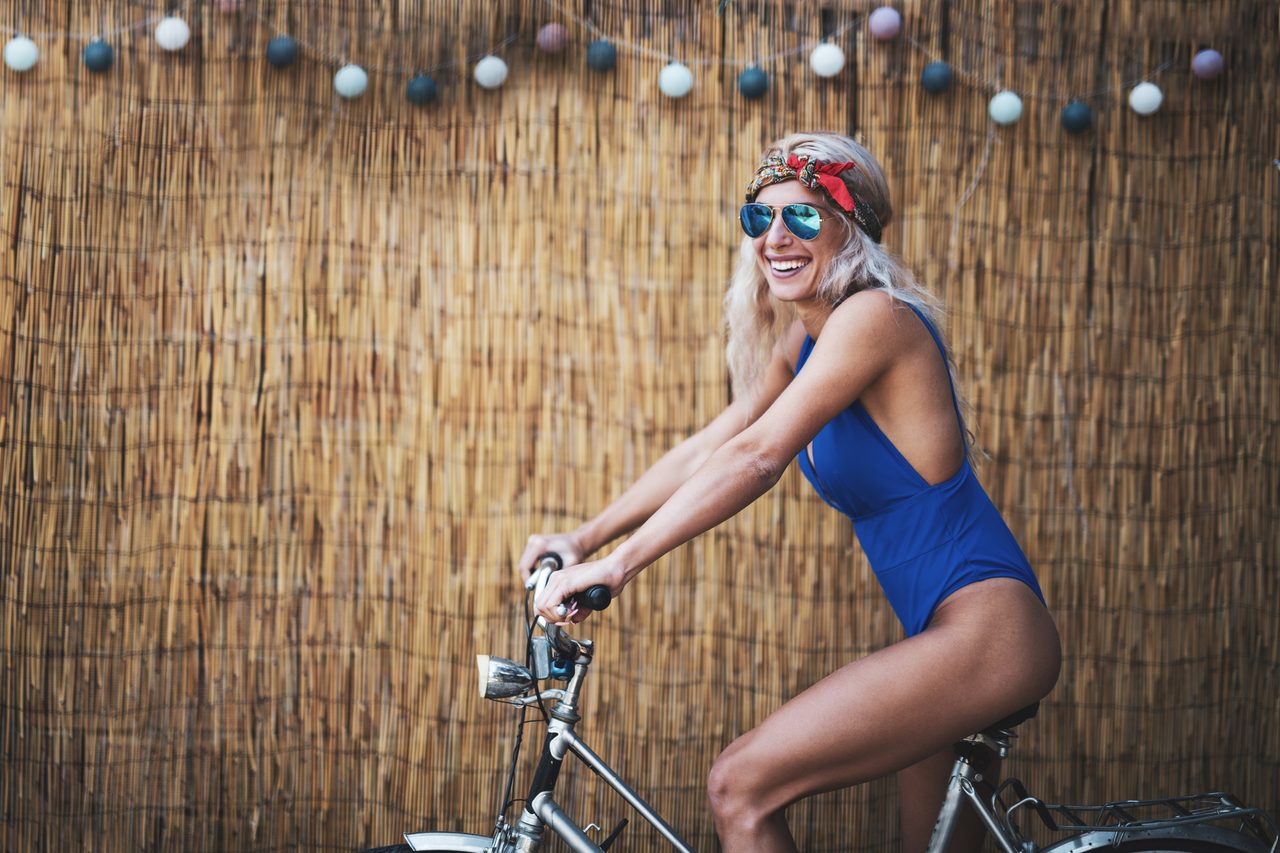
good_legs_fm No helmet, no power meter, no notes. The Department has never looked this relaxed on a bike.
good_legs_fm99 yr ago
{{ ig.l1 }} likes31880412 comments
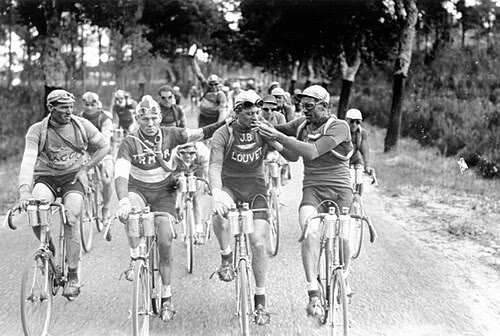
good_legs_fm Marginal gains, 1927. Tour de France riders share a light without slowing down. Our own recovery protocol is under review.
good_legs_fm2 yr ago
{{ ig.l2 }} likes49242232 comments
good_legs_fm A recovery ride, correctly executed. Ours involves a head wind and some regret.
good_legs_fm74 yr ago
{{ ig.l3 }} likes67004129 comments
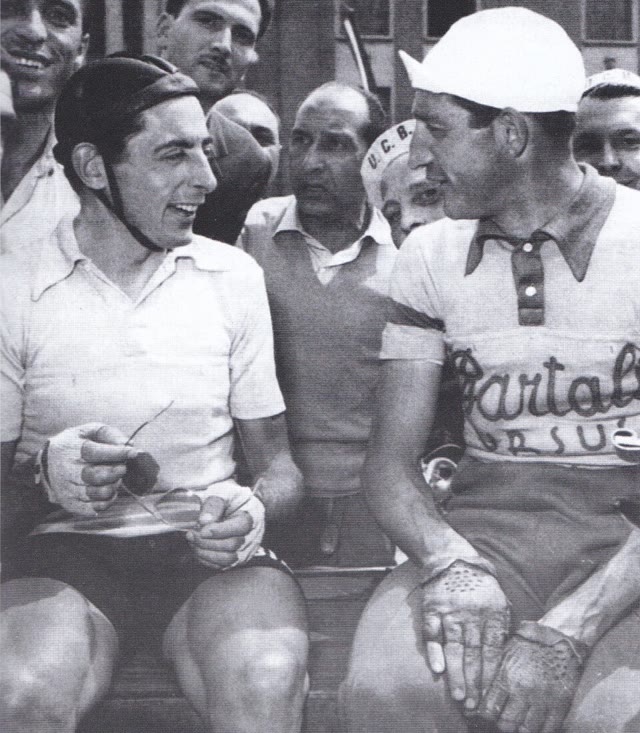
good_legs_fm Coppi and Bartali before the start, 1952. Rivals for a decade and still managed small talk. We can’t manage it with the neighbour.
good_legs_fm41 yr ago
{{ ig.l4 }} likes14976329 comments
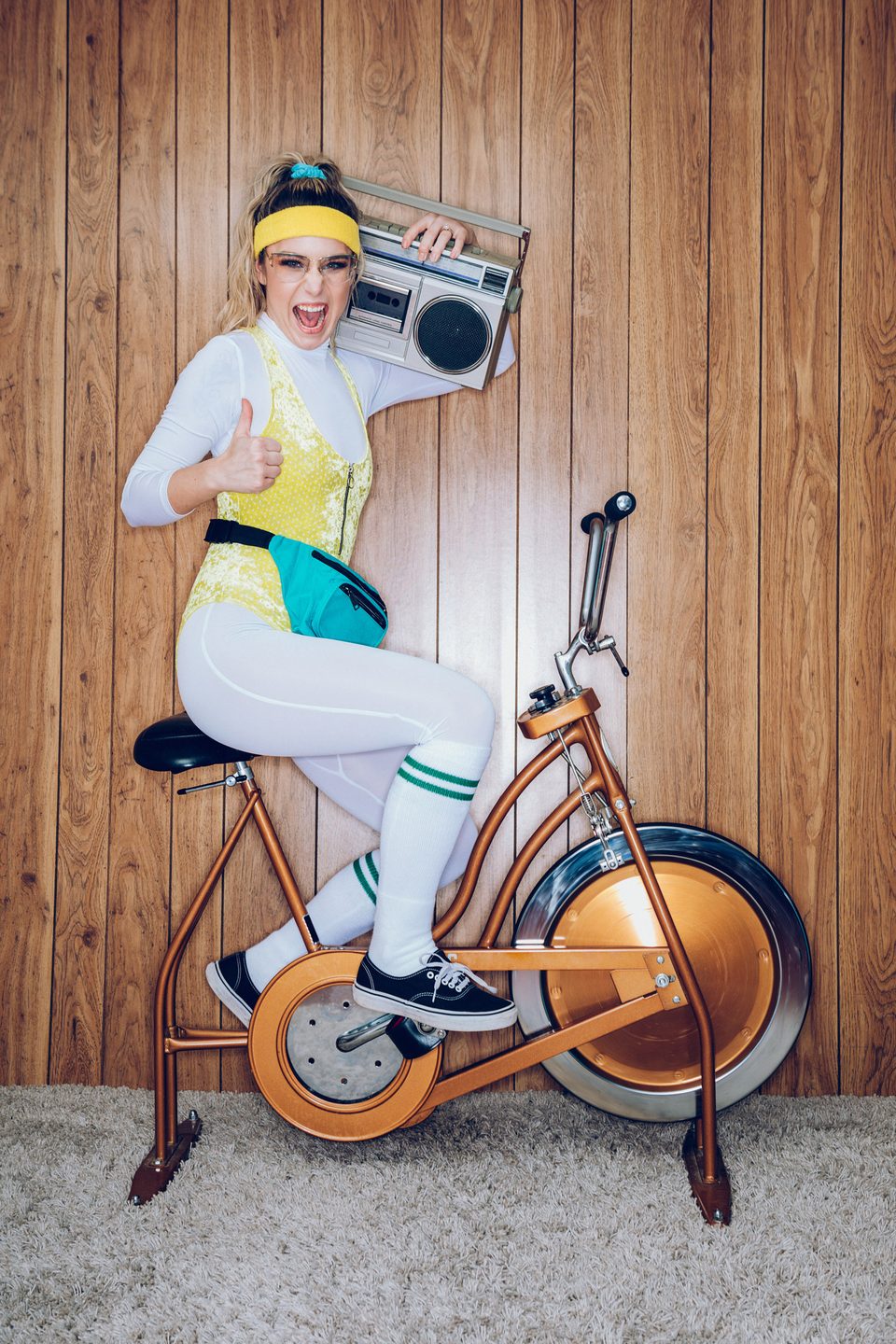
good_legs_fm Indoor training, as it was. One gear, one cassette, no firmware updates. She looks happier than anyone on our turbo.
good_legs_fm3 yr ago
{{ ig.l5 }} likes8830021 comments
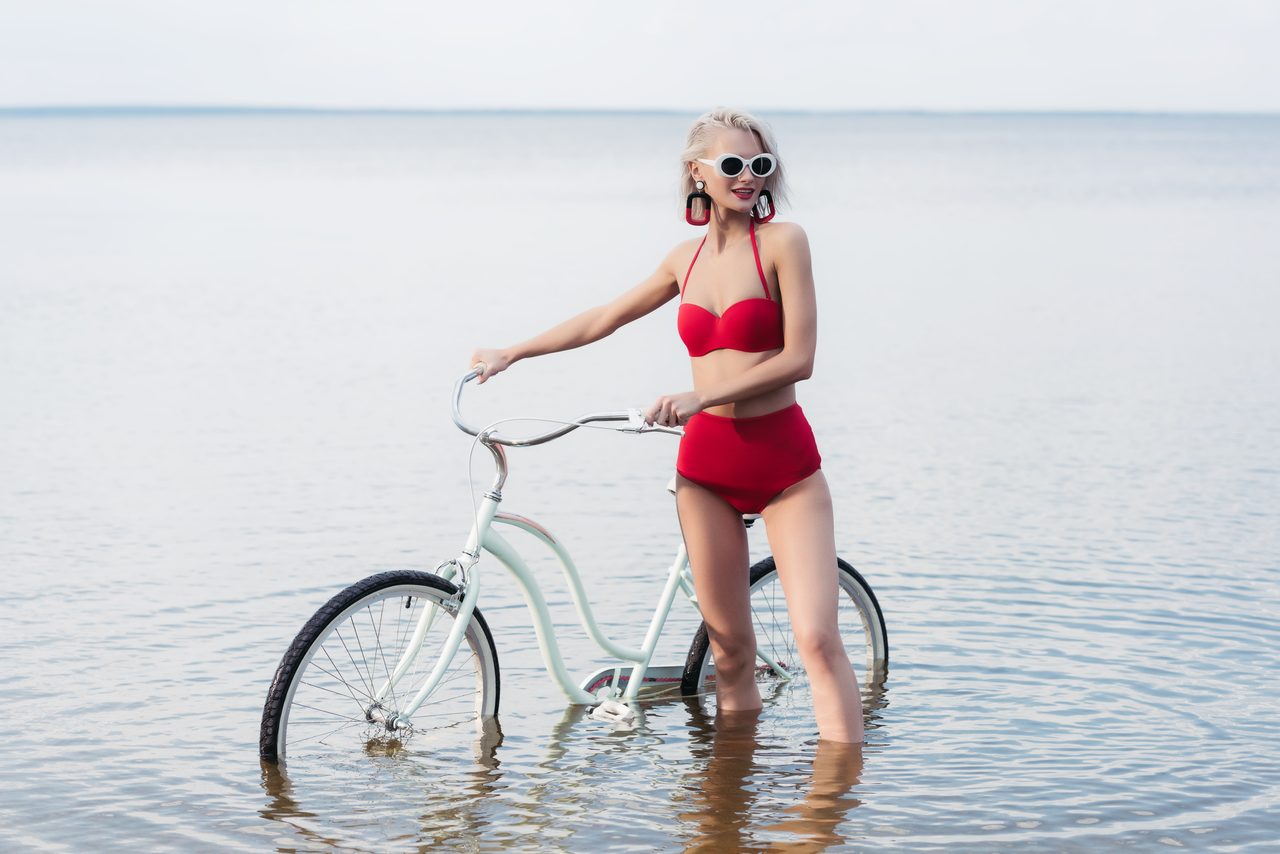
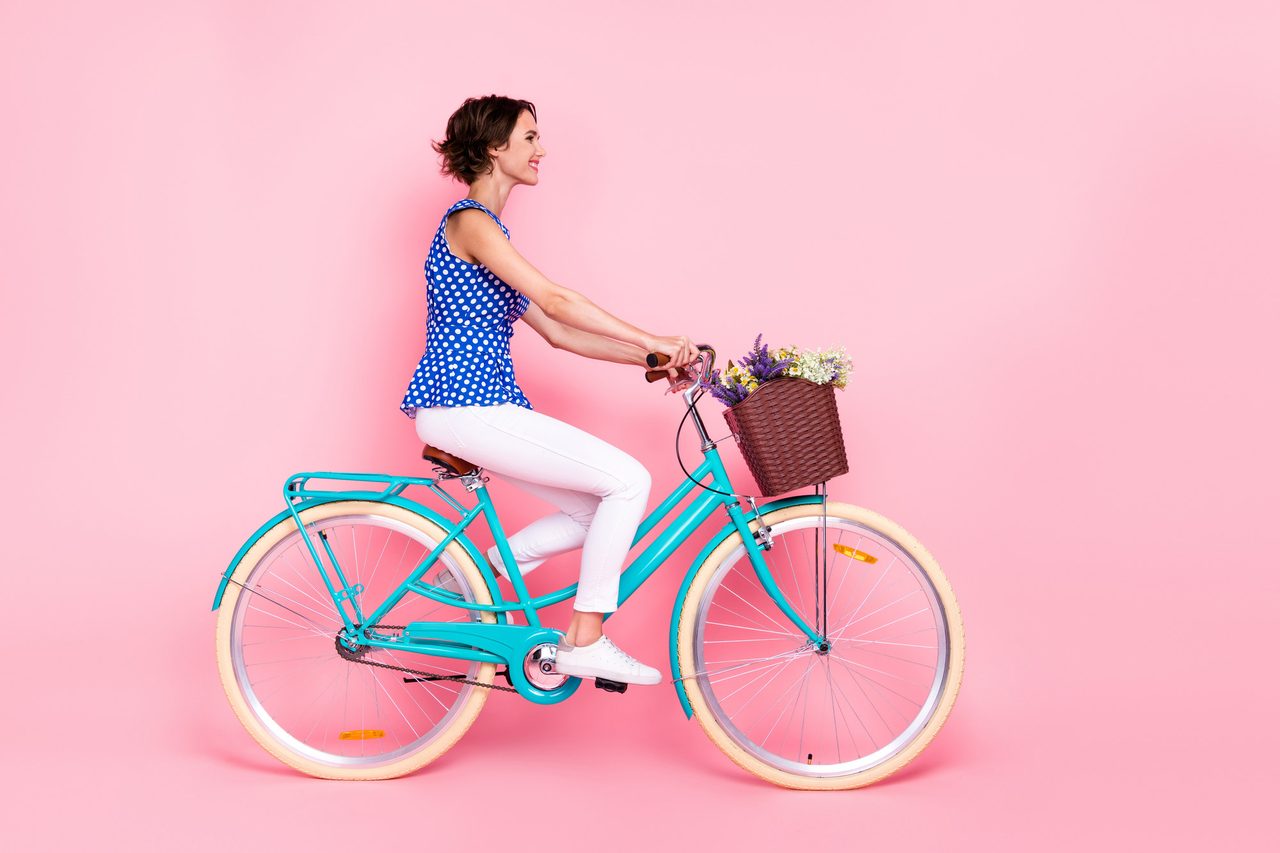
good_legs_fm She has matched her bike to our website. We respect the effort and have not managed it ourselves.
good_legs_fm124 yr ago
{{ ig.l6 }} likes21459008 comments
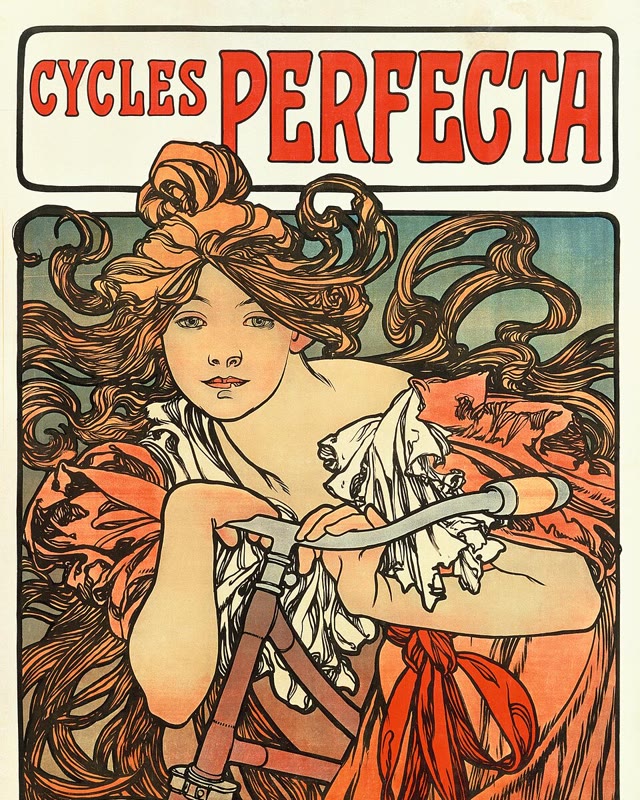
good_legs_fm Cycles Perfecta, 1902. Bicycle advertising peaked here. We have a cat in a hoodie.
good_legs_fm123 yr ago
{{ ig.l7 }} likes60214585 comments
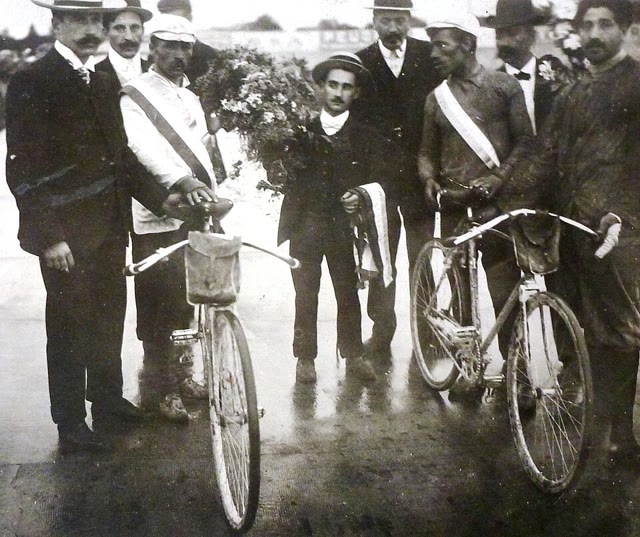
good_legs_fm Maurice Garin, winner of the first Tour de France, 1903. Note the moustache. Note also that nobody asked him for his numbers.
Developing the film…
Post room
The next set, by post.
One email when a new set goes up. Every other Friday at most.
The cat sorts the post. Nothing has ever gone out early.
Licking a stamp…
Guestbook
Signing opens soon. Bring a pen.
Signed. The cat has been told.
The catHon. Secretary2/10. Would nap again.
The TreasurerunqualifiedWe appear to have spent the budget on a television.
The Departmentall of itHello. This book is mostly for us.
Entries so far are the Department’s own. No members have signed.
3 entries, all ours
Finding a pen that works…
Rate My Luft
Luft{{ lf.mm }}mmThe judges
Soigneur{{ lf.s1 }}
Directeur{{ lf.s2 }}
The cat{{ lf.s3 }}
{{ lf.verdict }}
Luft: the air between head and cap.
Measuring the cap…
Settings
{{ set.date }}Date
{{ set.time }}Time
Pointer
Display Mode
Motion
Locked. We can’t afford carbon.
Good Legs OS Version 1.0Dept. of Amateur Performance. Not a real department.
Looking for the manual…
About
There is no Department. There’s a wireless, a small team and a cat who has somehow ended up in charge. We made it because an hour to ride kept turning into forty minutes of riding and twenty of scrolling for something to listen to. Press play before you clip in and leave it alone. Everything else is fair game.
Version one is for cyclists. Runners, you’re next. Listening costs nothing and needs no account. Membership is free as well.
Questions
What is Good Legs FM?
Good Legs FM is a free online radio station built for indoor cycling and gym sessions. Curated music sets, no account required, no ads. Press play and ride.
Is it free?
Yes. No subscription and no ads. You don’t need an account to listen.
Do I need to create an account?
Not to listen. Open the site and press play. Membership is free and optional: it adds the yoga class, a rider’s licence and new sets by email.
What kind of music is on it?
Curated sets across electronic, house, disco, and funk, built for the rhythm of a turbo session or a gym workout. Each set is mixed for a specific energy and duration.
Who makes it?
The Department of Amateur Performance.
The Department of Amateur Performance is not a real department. Good Legs FM is a real radio station, or will be once the music is licensed.
Demo film: six Polygoon newsreels (1946 to 1976), Netherlands Institute for Sound and Vision, CC BY-SA 3.0 NL; the Earth from Galileo’s 1990 pictures, NASA Goddard Scientific Visualization Studio. The sets on the radio and the tapes are by Purple Disco Machine, Fatboy Slim, Jaguar Skills, DJ Jazzy Jeff, New Kang and Matt Guy. None of them is involved with Good Legs FM. Instagram pictures: Wikimedia Commons; Anefo (CC0), ktk17028 (CC BY 2.0), public-domain pictures of 1902, 1903, 1927 and 1952, and four licensed iStock pictures.
Unfolding the leaflet…
Excuse Generator
{{ bin.line }}
{{ bin.notice }}
Good Legs FM
{{ date }}{{ hh }}:{{ mm }}
Good Legs FM
Music for indoor rides and strength sessions. Free. No account needed.Welcome back, .
Welcome to the Department. It is always July here.
A word from the Department of Amateur Performance.
The Department of Amateur Performance is making cycling cool again. Nobody asked it to.
Its view is that cycling was cool long before anyone measured it. Wool jerseys. Tan lines with an edge on them. A café stop that ran forty minutes over. A chalkboard held out of a car window with the gap on it.
The Department is not against numbers. It has simply never seen one look good in a photograph.
None of it needs a good bike or a free afternoon. The spare room counts. So do ten minutes.
It keeps a television that only shows old races, a wireless, a cat who holds three of its offices, and one item on the agenda: more good legs days.
A good legs day is the one when the road goes up and you don’t mind. The Department cannot issue them. It can keep the wireless on while you earn one.
Full disclosure: there is no Department. There’s a wireless, a small team and a cat who has somehow ended up in charge.
The Circular · No. 1 · Why this exists
It started with a frustration. Two, actually.
An hour to ride, and twenty minutes of it gone before a pedal turned.
We had an hour. Twenty minutes went on finding something to listen to. A third of the session, thumb-scrolling past playlists called things like Beast Mode, on a bike that was not moving.
Then the other one. Five minutes into a twenty-minute threshold effort, breathing through the ears, and shuffle picked Justin Bieber. You cannot skip a song at threshold. Your hands are busy holding on. So you ride fifteen minutes to it or you sit up, and either way the effort is ruined.
So we made a radio station. Somebody with taste picks the music and puts it in order. You press play before you clip in and you do not touch it again. No scrolling. No shuffle. No surprises at threshold.
It’s a radio station. It won’t make you faster. It might hand you back twenty minutes, which on an hour’s ride is the next best thing.
The Circular · No. 2 · Standards
A ruling on tan lines.
The Department has been asked to settle it. It has.
A tan line is a record. It says where the sleeve ended, how long you were out, and that you had better things to think about.
The Department recognises four. The sleeve, which should be sharp enough to rule a page with. The short, same standard. The sock, which ends every argument about sock height. And the glove, a small pale oval on the back of each hand that only another cyclist can read.
On a beach the full set makes you look as if you are still wearing the kit. The Department regards that as the point.
You cannot upload one. You cannot get one out of a bottle. Fake tan is a matter for a different department.
Which brings us to the winter. You can go to the tanning salon in your shorts and jersey to keep them crisp. It shows dedication.
Otherwise the line comes back in July. Here it never left.
The Circular · No. 3 · Records
A register of the people you ride with.
Compiled over many café stops. Corrections are not being accepted.
The Department keeps a register of training partners. Every club has all of them. Most riders are on it and are sure they are not.
The Easy Spinner. Writes “easy spin tomorrow” in the group chat. Is on the front doing forty by the second roundabout. Has never been asked to explain.
The Half-Wheeler. Rides half a wheel ahead of whoever is alongside. Draw level and the pace goes up. Has been doing it since 2011 and has not noticed.
The One Who Is Not Going Well. Has a cold, slept badly and has not touched the bike in a fortnight. Takes the sprint for the town sign and puts it down to the rest.
The Statistician. Gives you a threshold figure before a name. The Department has it on file. It did not ask.
The Noise. The bike is just back from the shop. Something is ticking and nobody can find it. You will stop twice, and the second time it will be raining.
The Borrower. No tube, no pump, no money for the café. Nine years in the club.
The Winter Champion. Unbeaten from November to March, in a spare room, against people from Belgium. Comes back out in April, pale and very fit.
Riders who cannot find themselves on the register should send it to the people they ride with. An answer usually comes back inside a minute.
The Circular · No. 4 · Personnel
The fan has been promoted to essential personnel.
A review of last winter has concluded.
The Department accepts that the fan does more work than anyone else in the garage. It has asked for nothing. It has never missed a session.
With immediate effect it outranks the towel, the second bottle and whoever said they would only do an easy hour.
Three settings are recognised: one, two, and the one that moves the curtains. Only the third is to be used.
This notice also concerns the rider who trains without one. Every club has such a rider. The claim is that it builds heat tolerance. The Department has examined the evidence, which is a puddle, and finds the only thing being built is rust on a headset.
Riders are asked to point the fan at themselves and say thank you.
The Circular · No. 5 · The list
We have a mailing list now. Sorry.
You were not consulted. Neither, really, were we.
One list. It is for the wireless and nothing else.
You get one email when a new set goes up. It says what the set is, how long it runs and where to find it. Then it stops.
It will not ask if you saw our last email. It will not be just checking in. It will not tell you what cycling taught us about leadership.
How often: every other Friday at most. That rules out most weeks.
To leave, reply with the word no and you’re gone. We’ll act like we don’t mind.
The Circular · No. 6 · Premises
The spare room is approved for sporting use.
The Department has completed its inspections.
The spare room, the garage, the corner of the gym by the fire door and one landing have all been inspected. All are approved for sporting use.
A turbo facing a wall is a valid training venue. So is a squat rack beside the washing machine, which will reach its spin cycle at the same moment you reach yours.
Inspectors found a kettlebell holding a door open in nearly every premises. A kettlebell holding a door open is not in use. It may stay where it is, but it does not count.
A room with rubber flooring, a mirror and a neon sign is also approved. The Department has checked, and the legs cannot tell the difference.
Nobody will be asked what else is kept in there. The clothes horse may stay.
The Circular · No. 7 · Minutes
Minutes of a meeting about the playlist.
Present: the cat. Apologies: everyone else.
Item one: shuffle. Abolished. The cat abstained, then knocked a pen off the desk.
Item two: whether the station needs a man shouting encouragement between songs. Rejected. Nobody has ever pedalled harder because a stranger told them to.
Item three: songs with a ninety-second intro. A four-minute effort cannot wait that long for the drums. Referred to the DJs, who already knew.
Item four: the friend who asks for the aux lead. Noted that every club has one, that the album will be the one from 2009, and that your face will be watched while it plays. No action possible.
Item five: a recording of a man saying pain is temporary, set to a house beat. Banned. The vote was unanimous, which is easy with one member present.
Any other business: the cat left. Meeting closed.
{{ news.count }}
Asking the cat for the post…
Guides
Guides
Workouts for people who ride, each with a set to play while you do them.
Guides · Strength & Conditioning · 20 minutes
Core Workout for Cyclists: 20 Minutes, One Band
Six movements that keep your pelvis still on the saddle, your trunk quiet under power and your lower back out of trouble.
Most core routines are built for the mirror. This one is built for the saddle. A cyclist’s trunk has three jobs: stop the pelvis rocking as the cadence climbs, resist the twist that comes with every hard pedal stroke, and hold the spine in a decent shape for hours. So there are no crunches here. Every exercise below is about holding a position while a limb moves.
Twenty minutes, one resistance band for the Pallof press, a mat if your floor is hard. Each exercise has a 30-second demonstration: it plays without sound, so your music carries on. Tap Sound for the spoken cues. Rest 30 to 45 seconds between sets and keep every rep slow enough to feel the position.
Listen while you work
Paired set: Garage Hours, Purple Disco Machine, Tomorrowland Ibiza Sunset Mix. Garage Hours is an hour long, which covers the circuit with room for a second pass.
The six exercises
1Dead bug3 sets of 8 each side
Why it matters: it trains the pelvis not to rock at high cadence.
Lie on your back with your arms pointing at the ceiling and your hips and knees bent to 90 degrees. Press your lower back gently into the floor and keep it there.
Lower the opposite arm and leg towards the floor, slowly, and stop before your back lifts off the mat. Return, then switch sides.
If your back arches, shorten the range. A small movement with a flat back beats a big one with a loose one.
2Band Pallof press3 sets of 10 each side
Why it matters: it’s the anti-rotation work that keeps your upper body quiet when you’re putting out 300 watts.
Anchor a resistance band at chest height and stand side-on to it, feet hip-width apart, holding the band at your sternum with both hands.
Press straight out until your arms are long and hold for two seconds. The band wants to turn you towards the anchor. Don’t let it. Bring your hands back in under control.
Do all the reps on one side, then turn around. Step further from the anchor to make it harder.
3Side plank3 holds of 20 to 30 seconds each side
Why it matters: lateral stability. When you’re climbing out of the saddle, this is what stops energy leaking sideways.
Lie on your side with your forearm under your shoulder and your legs straight, feet stacked or one in front of the other. Lift your hips so your body makes a straight line from head to heels.
Press the floor away with your forearm and lift the underside of your waist. Hold. Keep your shoulders stacked and your hips facing forward.
Bend your knees and hold from the knees instead if you can’t keep the line yet. Stop the hold when your hips start to sag, not when the clock says so.
4Bird dog3 sets of 8 each side
Why it matters: contralateral stability, the same diagonal pattern your body uses through the pedal stroke.
On hands and knees, hands under shoulders and knees under hips, with a long, neutral spine.
Reach the opposite arm and leg out until they’re level with your trunk. Hold for two seconds, then bring them back.
Picture a glass of water balanced on your lower back. If it would spill, your hips are rotating. Reach less far and keep them square.
5Bear plank shoulder tap3 sets of 8 each side
Why it matters: anti-rotation under instability, which is what a bike is.
Start on hands and knees, hands under shoulders and knees under hips. Tuck your toes and lift your knees a few centimetres off the floor. Your back stays flat, like a table.
Lift one hand and tap the opposite shoulder, then replace it and swap. Your pelvis should barely move. If it rocks, the reps are going too fast.
Set your feet wider to make it easier. Put your knees down between sides if you need to.
6Glute bridge3 sets of 12
Why it matters: it wakes up the glutes, which do most of the work in seated climbing and switch off after hours in the saddle.
Lie on your back with your knees bent and feet flat, about hip-width apart. Drive through your heels and lift your hips until your body makes a line from shoulder to knee.
Pause at the top and squeeze your glutes. Lower your hips slowly and keep your pelvis level on the way down.
If your hamstrings cramp, bring your feet closer to your body. If your lower back takes over, lift a little less high.
Do this three times a week. Before a ride or on a rest day, not after a hard session when you’re fatigued. Press play on Garage Hours and let the set carry you through.
Stop if you feel sharp pain, as opposed to the ordinary burn of working muscle. If your lower back hurts during or after these, or you have a history of back trouble, check with a physio before you carry on.
Questions
Do cyclists need core work?
Yes. A weak core means energy leaks through your pelvis instead of going to the pedals. Every watt you lose to trunk instability is a watt you paid for and didn’t use.
How often should cyclists do core?
Three times a week, 15 to 20 minutes. Consistency matters more than intensity.
Can I do this before a ride?
Yes. A short core session before riding activates the stabilisers. Don’t do it to failure. The point is activation, not exhaustion.
Guides · Strength · 30 minutes
Three Exercises for a Faster Sprint
A sprint is force, applied fast, one leg at a time. Three lifts cover all of it.
A sprint is ten to fifteen seconds of the most force you will put through the pedals all day. Riding more does not train it. Endurance work makes you efficient, and peak force needs load. So this one happens in a gym: three lifts, heavy enough to matter, twice a week.
You need a trap bar, a barbell with a bench, and a box at about knee height. Do two lighter sets of each lift before the working sets, and rest two to three minutes between heavy sets. The rest is part of the work. Each lift has a 30-second demonstration: it plays without sound, so your music carries on. Tap Sound for the spoken cues.
Listen while you work
Paired set: Heavy Rotation, Fatboy Slim, Everybody Loves A Mixtape, Vol. 9: Big Beach Boutique Revisited. An hour of Fatboy Slim, which covers the session, the rests and the walk back to the changing room.
The three lifts
1Trap-bar deadlift4 sets of 5
Why it matters: it builds peak force through the hips and knees together, the same joints that fire when you jump on the pedals.
Stand inside the bar with your feet hip-width apart. Push your hips back, bend your knees and take the handles. Chest up, back flat, arms long.
Brace, then push the floor away and stand up tall. Your hips and shoulders rise at the same speed. Pause at the top with your trunk braced.
Lower the bar under control and let it settle before the next rep. Pick a load you could lift seven times and stop at five.
2Barbell hip thrust3 sets of 8
Why it matters: driving the hip straight is where most of the power in a pedal stroke comes from, and the glutes are the biggest engine you have for it.
Sit with your upper back against a bench and the bar across your hips. Pad the bar. Feet flat, about hip-width apart, close enough that your shins are upright at the top.
Drive through your heels and lift your hips until your trunk is level. Keep your ribs down and your chin tucked. Hold for one second.
Lower slowly. If you feel it in your lower back and not your glutes, lift a little less high and keep the ribs down.
3High box step-up3 sets of 6 each side
Why it matters: a sprint is single-leg work. This makes each leg produce force on its own, from a deep hip angle like the top of the stroke.
Put one whole foot on the box and lean forward slightly, so your weight is over that foot.
Drive through the foot on the box and stand up tall. The trailing leg comes along for the ride. If you are pushing off the floor, the box is too high.
Lower for a slow count of three and touch the floor lightly. Do all the reps on one side, then swap. Hold dumbbells once six clean reps are easy.
Do this twice a week with two days between sessions, and not the day before a hard ride. Give it six weeks before you judge it. Put Heavy Rotation on and take the rests.
These are loaded lifts. If you have not lifted before, start with an empty bar or light dumbbells and have a coach or an experienced lifter watch your first session. Stop if you feel sharp pain, as opposed to the ordinary effort of a heavy set.
Questions
Will lifting make me heavier?
Not on two sessions a week alongside your riding. At these rep ranges the early gains come from your existing muscle learning to produce more force, not from new muscle.
Should I keep lifting during the season?
Yes. One session a week holds on to what you built. Take a set off each lift and keep the load the same.
Can I do this at home?
Not this one. It needs load. For a session with no equipment, start with the core workout.
Guides · Strength · 25 minutes
Single-Leg Strength for Cyclists: Four Exercises, Two Dumbbells
You pedal one leg at a time. Train them one at a time and the weaker one has nowhere to hide.
A pedal stroke is one leg pushing while the other gets out of the way. Squats and deadlifts on two legs let the stronger side cover for the weaker one, and most riders have a weaker one. Single-leg work finds it within a set or two.
You need a pair of dumbbells, a low bench and about twenty-five minutes. Start every exercise on your weaker leg and match the reps on the stronger one, no more. Rest ninety seconds between sets. Each exercise has a 30-second demonstration: it plays without sound, so your music carries on. Tap Sound for the spoken cues.
Listen while you work
Paired set: Last Set, Jaguar Skills, Rinse FM Bass Workout. Thirty-six minutes: the session, the rests, and time to put the dumbbells back.
The four exercises
1Reverse lunge3 sets of 8 each side
Why it matters: it loads the front leg through the hip and knee together, as the downstroke does, and stepping back is kinder to the knees than stepping forward.
Stand tall with your feet hip-width apart and clear space behind you. Hold a dumbbell in each hand once the unweighted version is easy.
Step back quietly and lower until the back knee is just off the floor. Keep the pressure through your front foot.
Pause, then drive through the front foot and return to standing. Reset your balance before the next rep.
2Rear-foot elevated split squat3 sets of 6 each side
Why it matters: with the back foot on a bench, nearly all the load goes through the front leg. It is as close as the gym gets to pushing a big gear on one side.
Rest your rear foot on a low bench and plant the front foot firmly, far enough forward that you can lower straight down.
Lower under control and pause briefly at the bottom. Keep your front knee tracking over your foot.
Drive through the front foot to rise, keeping your trunk steady. Pick up the dumbbells only once six clean reps are easy without them.
3Single-leg Romanian deadlift3 sets of 8 each side
Why it matters: it trains the hamstrings and glutes to control the hip on one leg, and it shows up any wobble at the hip and ankle straight away.
Stand on one leg with a soft knee. Hold a dumbbell in the opposite hand.
Reach your free heel back as your chest moves forwards, tipping from the hip. Keep your back flat and your hips level.
Go as far as your hamstring allows, then bring your chest and free leg back together and stand tall. Touch a wall with your free hand if your balance gives out before the leg does.
4Single-leg calf raise3 sets of 12 each side
Why it matters: everything your hip and thigh produce reaches the pedal through the calf. It works on every stroke and almost nobody trains it.
Stand on one foot beside a stable support and hold it lightly. Keep the working knee straight.
Lift your heel as high as it goes, keeping your ankle steady.
Lower slowly, over about three seconds, without letting the ankle roll out. Move to the edge of a step for more range once flat ground is easy.
Do it twice a week, with at least a day between sessions and not the day before a hard ride. Add load when the last rep of the last set still looks like the first. Put Last Set on and take the rests.
Learn each exercise without weight first. Sore legs for a day or two after the first session are normal. Sharp pain in a knee, hip or back is different: stop and get it looked at.
Questions
Why single-leg exercises for cycling?
Pedalling is single-leg work. Training one leg at a time builds strength in the pattern you ride in, and stops the stronger side doing the weaker side’s share.
How heavy should the dumbbells be?
Start with a weight you could lift for three more reps than the set asks for. Go up when all three sets feel that way.
Can I do this in the same week as the sprint session?
Yes. Do one of each, two or three days apart. Both are heavy on the legs, so keep them off consecutive days.
Guides · Upper Body · 10 minutes
Neck and Shoulder Exercises for Cyclists: Five Moves for Long Rides
Your head weighs about five kilos, and on a long ride your neck holds it up for hours. Five moves to make that easier.
On the bike your upper back rounds, your shoulders creep towards your ears and your neck bends back so you can see the road. Hold that for three hours and the muscles at the back of the neck do all the work, while the ones at the front and between the shoulder blades do very little. The ache at hour three is those muscles running out.
These five moves train the neck to hold the position, hand some of the work back to the upper back, and loosen the part of the spine that is supposed to do the bending. No weights. You need a mat, a bench and a wall. Each move has a 30-second demonstration: it plays without sound, so your music carries on. Tap Sound for the spoken cues.
Listen while you work
Paired set: Garage Hours, Purple Disco Machine, Tomorrowland Ibiza Sunset Mix. Start the set, do the ten minutes, then get on the bike with most of the hour still to run.
The five moves
1Supine chin tuck8 holds of 5 seconds
Why it matters: the small muscles at the front of the neck keep your head steady. On the bike they spend hours stretched long and doing nothing.
Lie on your back with your knees bent and let your head rest on the floor.
Nod your chin gently towards your throat and hold. The back of your head stays on the floor.
Breathe normally. The front of the neck works while your jaw and shoulders stay relaxed. It is a small movement: if the muscles at the side of your neck stand out, ease off.
2Quadruped neck extension hold5 holds of 10 seconds
Why it matters: this is the riding position without the bike: the back of the neck holding your head up against gravity. It builds the endurance those muscles run out of.
Start on your hands and knees with a long spine and your eyes on the floor.
Lift your gaze gently forwards, to about where the road would be, and hold. Keep breathing.
Keep your shoulders away from your ears and your lower back still. Let your eyes drop to the floor between holds.
3Bench thoracic extension8 slow reps
Why it matters: when the upper back will not straighten, the neck has to bend further to lift your eyes. Free the upper back and the neck has less to do.
Kneel facing a bench. Rest your elbows on it with your hands behind your head.
Sink your chest gently towards the floor, keeping your elbows on the bench. Keep your ribs down, so the bend comes from your upper back and your lower back stays out of it.
Take one breath at the bottom, then bring your chest back up slowly.
4Prone Y-T raise2 sets of 6 of each
Why it matters: the muscles between and below the shoulder blades hold your shoulders down and back. When they tire, the shoulders ride up and the neck takes the load.
Lie face down on a bench, an incline one if you have it, and let your arms hang with your thumbs up.
Lift your arms into a Y and lower them slowly. Then lift them straight out to the sides into a T. Keep your neck long and your eyes on the floor.
Use no weight to begin with. The lift is small and slow, and it starts at the shoulder blades.
5Wall slide10 slow reps
Why it matters: it teaches your arms to go overhead while your ribs stay where they are, which is the hunch in reverse.
Stand with your back, elbows and wrists against a wall.
Slide your arms up the wall, keeping your ribs down. Go only as high as your wrists and elbows stay in contact.
Slide back down slowly. If your lower back arches away from the wall, you have gone too high.
Do it three or four times a week, before a ride or on its own. It works as a warm-up for the turbo: start Garage Hours, do the ten minutes, then clip in.
Nothing here should cause pain, pins and needles or dizziness. Stop if it does. Neck pain that travels into your arm or hand, or that does not ease once you are off the bike, is one for a physiotherapist or a doctor.
Questions
Why does my neck hurt on long rides?
Your neck bends back for hours so you can see ahead, and the muscles holding it get tired. A rounded upper back and a long, low position make them work harder.
Will this fix my neck pain?
It helps with the ordinary ache that comes from holding the position. It will not fix a bike that does not fit, or an injury. If the pain is sharp, one-sided or comes with numbness, get it looked at.
How long until it helps?
Give it four to six weeks at three sessions a week. Endurance in small muscles builds slowly.
Guides · Mobility · 10 minutes
Mobility for Cyclists: Five Moves, Ten Minutes
The bike holds you in one shape for hours. These five moves take you through the ones it leaves out.
Riding is one position, repeated. Your hips never fully straighten, your upper back stays rounded over the bars, and nothing moves sideways or turns. Being stiff in those places is what a few thousand hours of practice at one shape looks like.
This is five moves in ten minutes, working from standing down to lying on your back. None of them is a long hold: go slowly into each position, pause for a breath and come back out. Each move has a 30-second demonstration: it plays without sound, so your music carries on. Tap Sound for the spoken cues.
Listen while you work
Paired set: Spin Down, DJ Jazzy Jeff, Magnificent Lunch Break. Easy music for slow work. Ten minutes in, you can stop or go round again.
The five moves
1Ankle rock at the wall10 each side
Why it matters: a stiff ankle makes the knee and hip find the missing range somewhere else, on the bike and in every squat or lunge you do off it.
Face a wall in a split stance with your hands on it. Plant the whole of your front foot.
Move your front knee forwards over your middle toes until the ankle stops you. Keep the heel down the whole way.
Come back out smoothly and reset your balance. Do not force the end of the range. It moves a little further over a few weeks.
2Half-kneeling hip-flexor mobility8 each side
Why it matters: it is the one direction your hips never go on the bike: straight, with the thigh behind you.
Kneel with your front foot planted and both hips facing forwards. Put a cushion under the back knee if the floor is hard.
Tuck your pelvis under first, as if drawing your belt buckle up towards your chin. Then shift forwards gently, keeping your ribs over your pelvis.
Stop when the front of the back hip pulls, take one breath and ease back. If your lower back arches, you have gone past the stretch.
3Adductor rock-back8 each side
Why it matters: the inner thighs spend every ride working in one narrow line. This takes them long and out to the side.
Start on your hands and knees. Straighten one leg out to the side with the foot flat on the floor.
Keep your hands planted and move your hips back towards your heel. Keep your spine long as you go.
Bring your hips forwards again smoothly. You should feel it along the inside of the straight leg.
4Side-lying thoracic rotation6 each side
Why it matters: hours over the bars leave the upper back rounded and stiff. When it will not turn, your neck and lower back do the turning for it.
Lie on your side with your head on a cushion, your knees bent and both arms straight out in front of you.
Lift the top arm and open it across towards the floor behind you, letting your chest follow. Keep your knees together.
The turn comes from your upper back. If your pelvis starts to roll back, you have gone far enough. Come back slowly.
5Supine breathing reach10 slow breaths
Why it matters: it lets the ribs and shoulders settle after hours of being held in place, and it slows your breathing before you get up.
Lie on your back with your feet resting on a chair, a box or the sofa. Reach both arms towards the ceiling.
Breathe out slowly and let your ribs settle towards the floor. Keep a gentle reach through your arms as you do.
Breathe in quietly and go again. Let your jaw and shoulders relax. There is no prize for reaching harder.
Do it after a ride, or on its own on a day off. Ten minutes most days does more than forty on a Sunday. Put Spin Down on and take your time.
Every move should feel like a firm pull in the muscle and nothing more. Back off if you feel pinching in a joint or sharp pain, and leave out any move that aggravates an old injury.
Questions
Should I do this before or after a ride?
After, or on its own. A few slow reps of each move also work as a warm-up, but keep the full routine for when you are off the bike.
How often should I do it?
Most days, if you can. It takes ten minutes and needs no warm-up beyond going gently for the first couple of reps.
How long until I notice a difference?
Two to three weeks of regular practice. Ankles and upper backs change slowly, so judge it by the month.
{{ gd.count }}
Rolling out the mat…
Mixtapes
Mixtapes
Long sets for indoor rides and strength sessions. Press play and leave it alone.
Not yet. Final Laps is out Friday, 12:57pm, and not a minute before.
{{ mx.label0 }}61 minutes
Garage Hours
An hour of music for the turbo. Press play before you clip in and leave it alone.
02-GarageHours.tapeMIXTomorrowland Ibiza Sunset MixBYPurple Disco MachineLENGTH61 minutes
One continuous mix, picked by Good Legs FM to be left running. Press play and get on with the session.
{{ mx.label1 }}60 minutes
Heavy Rotation
An hour of music for the squat rack. Press play, then pick something up.
03-HeavyRotation.tapeMIXEverybody Loves A Mixtape, Vol. 9: Big Beach Boutique RevisitedBYFatboy SlimLENGTH60 minutes
One continuous mix, picked by Good Legs FM to be left running. Press play and get on with the session.
{{ mx.label2 }}36 minutes
Last Set
Thirty-six minutes for when that is all the time there is.
04-LastSet.tapeMIXRinse FM Bass WorkoutBYJaguar SkillsLENGTH36 minutes
One continuous mix, picked by Good Legs FM to be left running. Press play and get on with the session.
good_legs_fm No helmet, no power meter, no notes. The Department has never looked this relaxed on a bike.
good_legs_fm99 yr ago
{{ ig.l1 }} likes31880412 comments
good_legs_fm Marginal gains, 1927. Tour de France riders share a light without slowing down. Our own recovery protocol is under review.
good_legs_fm2 yr ago
{{ ig.l2 }} likes49242232 comments
good_legs_fm A recovery ride, correctly executed. Ours involves a head wind and some regret.
good_legs_fm74 yr ago
{{ ig.l3 }} likes67004129 comments
good_legs_fm Coppi and Bartali before the start, 1952. Rivals for a decade and still managed small talk. We can’t manage it with the neighbour.
good_legs_fm41 yr ago
{{ ig.l4 }} likes14976329 comments
good_legs_fm Indoor training, as it was. One gear, one cassette, no firmware updates. She looks happier than anyone on our turbo.
good_legs_fm3 yr ago
{{ ig.l5 }} likes8830021 comments
good_legs_fm She has matched her bike to our website. We respect the effort and have not managed it ourselves.
good_legs_fm124 yr ago
{{ ig.l6 }} likes21459008 comments
good_legs_fm Cycles Perfecta, 1902. Bicycle advertising peaked here. We have a cat in a hoodie.
good_legs_fm123 yr ago
{{ ig.l7 }} likes60214585 comments
good_legs_fm Maurice Garin, winner of the first Tour de France, 1903. Note the moustache. Note also that nobody asked him for his numbers.
Developing the film…
Post room
The next set, by post.
One email when a new set goes up. Every other Friday at most.
The cat sorts the post. Nothing has ever gone out early.
Licking a stamp…
Guestbook
Signing opens soon. Bring a pen.
Signed. The cat has been told.
The catHon. Secretary2/10. Would nap again.
The TreasurerunqualifiedWe appear to have spent the budget on a television.
The Departmentall of itHello. This book is mostly for us.
Entries so far are the Department’s own. No members have signed.
3 entries, all ours
Finding a pen that works…
Rate My Luft
Luft{{ lf.mm }}mmThe judges
Soigneur{{ lf.s1 }}
Directeur{{ lf.s2 }}
The cat{{ lf.s3 }}
{{ lf.verdict }}
Luft: the air between head and cap.
Measuring the cap…
Settings
{{ set.date }}Date
{{ set.time }}Time
Pointer
Display Mode
Motion
Locked. We can’t afford carbon.
Good Legs OS Version 1.0Dept. of Amateur Performance. Not a real department.
Looking for the manual…
About
There is no Department. There’s a wireless, a small team and a cat who has somehow ended up in charge. We made it because an hour to ride kept turning into forty minutes of riding and twenty of scrolling for something to listen to. Press play before you clip in and leave it alone. Everything else is fair game.
Version one is for cyclists. Runners, you’re next. Listening costs nothing and needs no account. Membership is free as well.
Questions
What is Good Legs FM?
Good Legs FM is a free online radio station built for indoor cycling and gym sessions. Curated music sets, no account required, no ads. Press play and ride.
Is it free?
Yes. No subscription and no ads. You don’t need an account to listen.
Do I need to create an account?
Not to listen. Open the site and press play. Membership is free and optional: it adds the yoga class, a rider’s licence and new sets by email.
What kind of music is on it?
Curated sets across electronic, house, disco, and funk, built for the rhythm of a turbo session or a gym workout. Each set is mixed for a specific energy and duration.
Who makes it?
The Department of Amateur Performance.
The Department of Amateur Performance is not a real department. Good Legs FM is a real radio station, or will be once the music is licensed.
Demo film: six Polygoon newsreels (1946 to 1976), Netherlands Institute for Sound and Vision, CC BY-SA 3.0 NL; the Earth from Galileo’s 1990 pictures, NASA Goddard Scientific Visualization Studio. The sets on the radio and the tapes are by Purple Disco Machine, Fatboy Slim, Jaguar Skills, DJ Jazzy Jeff, New Kang and Matt Guy. None of them is involved with Good Legs FM. Instagram pictures: Wikimedia Commons; Anefo (CC0), ktk17028 (CC BY 2.0), public-domain pictures of 1902, 1903, 1927 and 1952, and four licensed iStock pictures.
Unfolding the leaflet…
Excuse Generator
{{ bin.line }}
{{ bin.notice }}
Version one is for cyclists. Runners, you’re next.